
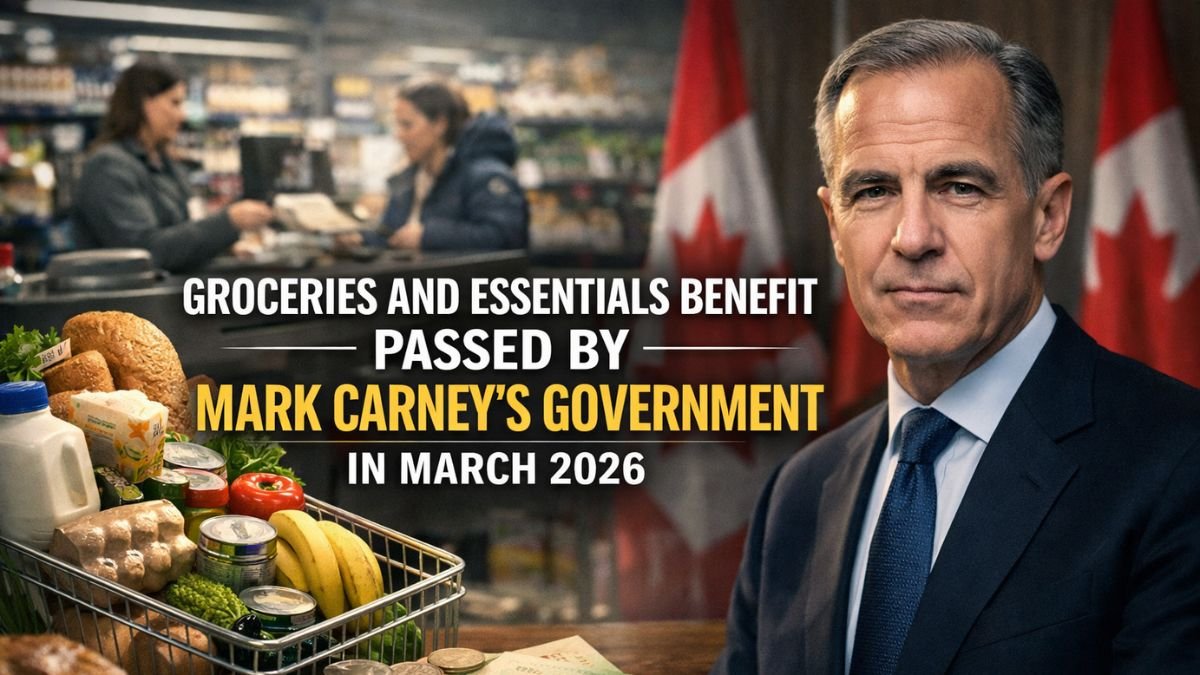
In response to the growing cost of living and rising grocery prices across Canada, the federal government led by Mark Carney has introduced a new support measure aimed at helping households manage essential expenses. In March 2026, the Groceries and Essentials Benefit was officially passed as part of a broader economic relief strategy designed to assist families, seniors, and individuals facing financial pressure.
Why the Groceries and Essentials Benefit Was Introduced
Rising grocery prices in Canada
Over the past several years, Canadian households have experienced significant increases in grocery prices and basic living expenses. Inflation has affected essential goods such as food, utilities, and transportation, placing additional pressure on families across the country.
The government has identified several factors contributing to rising costs:
- inflation affecting food supply chains
- higher transportation and distribution expenses
- global economic fluctuations
- increased housing and energy costs
By introducing this benefit, policymakers hope to provide short-term relief to those most affected by these economic pressures.
Supporting vulnerable households
The Groceries and Essentials Benefit is designed primarily to assist individuals and families with limited income. Many Canadians rely on government programs to help manage their financial responsibilities, especially during periods of economic uncertainty.
Programs such as this benefit aim to support:
- low-income households
- seniors living on fixed retirement income
- families with children
- individuals experiencing financial hardship
Providing targeted assistance helps ensure that essential needs remain affordable for vulnerable groups.
Key Details of the Groceries and Essentials Benefit
Overview of the program
The Groceries and Essentials Benefit passed in March 2026 represents a financial support initiative aimed at helping Canadians manage the rising cost of everyday goods. The program is administered through federal systems that already manage various benefits and tax credits.
Summary of the Groceries and Essentials Benefit
| Category | Information |
|---|---|
| Program Name | Groceries and Essentials Benefit |
| Introduced By | Mark Carney’s Government |
| Approval Date | March 2026 |
| Target Group | Low- and middle-income households |
| Purpose | Help cover grocery and essential expenses |
| Distribution Method | Government payment system |
This table highlights the basic structure and purpose of the benefit introduced in March 2026.
Eligibility Requirements for the New Benefit
Who may qualify
Eligibility for the Groceries and Essentials Benefit passed by Mark Carney’s government in March 2026 is expected to depend on several factors, including income levels and residency status.
Typical eligibility criteria for similar federal programs include:
- being a Canadian resident for tax purposes
- filing a recent income tax return
- meeting income thresholds for financial assistance
- qualifying under specific household categories
Because government benefits often rely on tax records, filing taxes remains essential for determining eligibility.
Importance of filing taxes
Even individuals with minimal income should file a tax return annually. Government support programs frequently rely on tax data to calculate payments and confirm eligibility.
Without updated tax information, individuals may miss out on benefits such as the Groceries and Essentials Benefit introduced in March 2026.
How the Benefit Will Be Distributed
Payment methods
The federal government typically distributes financial assistance programs using secure payment methods. The Groceries and Essentials Benefit is expected to follow a similar approach.
Possible payment methods include:
- direct deposit into bank accounts
- mailed government cheques
- integration with existing benefit systems
Direct deposit remains the fastest and most secure way for Canadians to receive government payments.
Payment timing
Although the benefit was passed in March 2026, payments may be issued according to a schedule established by government agencies responsible for administering the program.
In some cases, payments may be issued in installments or alongside other federal benefits.
Impact of the Groceries and Essentials Benefit
Helping Canadians manage food costs
One of the main goals of the Groceries and Essentials Benefit passed by Mark Carney’s government in March 2026 is to help Canadians afford basic necessities. Food costs represent a significant portion of household spending.
For many families, rising grocery bills can strain monthly budgets. Additional financial assistance can help offset these expenses.
Supporting economic stability
Government benefits also contribute to broader economic stability. When households receive financial support, they are better able to spend on essential goods and services.
This spending can help maintain economic activity and support local businesses.
Relationship With Other Canadian Benefit Programs
Complementing existing benefits
The Groceries and Essentials Benefit does not replace existing programs. Instead, it complements other forms of government assistance available to Canadians.
These programs may include:
- Old Age Security for seniors
- Canada Pension Plan retirement benefits
- Canada Child Benefit for families
- GST or HST credits for low-income households
Together, these programs form a network of financial support designed to reduce economic hardship.
Long-term policy goals
The introduction of this benefit also reflects broader policy goals focused on affordability. Governments often introduce targeted programs to address specific economic challenges faced by citizens.
By providing financial support for groceries and essential items, policymakers hope to improve overall financial security for Canadians.
Tips for Canadians Expecting the Benefit
Individuals who may qualify for the Groceries and Essentials Benefit can take several steps to ensure they receive the payment without delays.
Helpful recommendations include:
- filing income tax returns on time
- updating banking information for direct deposit
- monitoring official government announcements
- verifying eligibility through government portals
- keeping personal information current
Following these steps can help ensure smooth processing of payments.
Future Outlook for Affordability Programs
Continued focus on cost-of-living support
Affordability remains one of the most significant issues facing Canadian households. Governments are expected to continue exploring policies aimed at easing financial pressure on citizens.
Programs similar to the Groceries and Essentials Benefit passed in March 2026 may play an important role in addressing these challenges.
Potential program expansions
Depending on economic conditions and public demand, programs designed to support essential expenses may evolve over time. Governments may expand eligibility criteria or introduce additional payments if necessary.
Monitoring future policy updates will be important for Canadians seeking financial assistance.
Conclusion
The passage of the Groceries and Essentials Benefit by Mark Carney’s government in March 2026 represents a significant step toward addressing rising living costs in Canada. By providing targeted financial assistance to households struggling with grocery and essential expenses, the government aims to ease financial pressure and improve affordability.
FAQs About the Groceries and Essentials Benefit in Canada
Who is eligible for the Groceries and Essentials Benefit introduced in March 2026?
Eligibility is generally based on income level, residency in Canada, and having a recent tax return filed with the government.
When will Canadians receive the Groceries and Essentials Benefit?
Although the benefit was passed in March 2026, the exact payment schedule may depend on government processing and benefit distribution timelines.
How will the Groceries and Essentials Benefit be paid?
Payments are expected to be issued through direct deposit or mailed cheques using the government’s existing benefit payment systems.